Why Most Ceramic Coatings Fail — And How the Coat & Care System Fixes It

SCHEDULE ONLINE GET A FREE ESTIMATE
March 18, 2026

If you've ever heard someone say their ceramic coating stopped working after a year or two, there's a good chance the coating itself wasn't the problem. The real culprit? No maintenance plan. Ceramic coatings are one of the most powerful tools available to protect your vehicle's paint, but they're not set-it-and-forget-it solutions. Without proper care, even the best coating on the market will begin to underperform — and most shops never tell their customers that.


At Maryland Auto Spa, we've seen this pattern enough times that we built an entirely new system around solving it. It's called the Coat & Care System, and it's the only program of its kind in Maryland.


What Is a Ceramic Coating and Why Do They Fail?


Ceramic coatings are liquid polymer treatments applied to a vehicle's exterior surfaces. When cured, they bond chemically with the factory paint to create a hard, hydrophobic layer that repels water, dirt, UV rays, and environmental contaminants. A professionally applied ceramic coating should last anywhere from two to five or more years depending on the product and, here's the key, how well it's maintained afterward.


The failure point for most coatings comes down to three things: improper wash technique, skipping decontamination, and missing seasonal health checks. Over time, iron fallout, road grime, and mineral deposits accumulate on the surface of the coating. If those aren't removed through proper decontamination washing, they begin to compromise the hydrophobic properties of the coating. The result is a surface that no longer beads water the way it should, loses its gloss, and feels rough to the touch even though the coating is technically still there.


Most detailing shops apply the coating and send you home with a receipt. A few might hand you a basic care sheet. Almost none offer a structured maintenance program to back up the investment they just helped you make. That's the gap we set out to close.


Introducing the Coat & Care System


The Coat & Care System was built on a simple premise: a ceramic coating is only as good as the plan behind it. Every Coat & Care package at Maryland Auto Spa includes two things that no other shop in Maryland offers together- professional coating installation and the maintenance program your coating needs to perform for years.


Here's what every package includes:

  • Professional Modesta ceramic coating installation
  • Your first Quarterly Ceramic Performance Refresh
  • A Modesta Maintenance Kit so you know exactly how to care for your coating at home between visits
  • After-care wash instructions specific to your coating
  • The Quarterly Ceramic Performance Refresh is a professional decontamination service designed to remove the iron fallout, mineral deposits, and surface contamination that accumulate on your coating over time. Think of it as a tune-up for your paint protection — keeping the hydrophobic properties performing at their peak and extending the life of your coating significantly.


The Modesta Difference


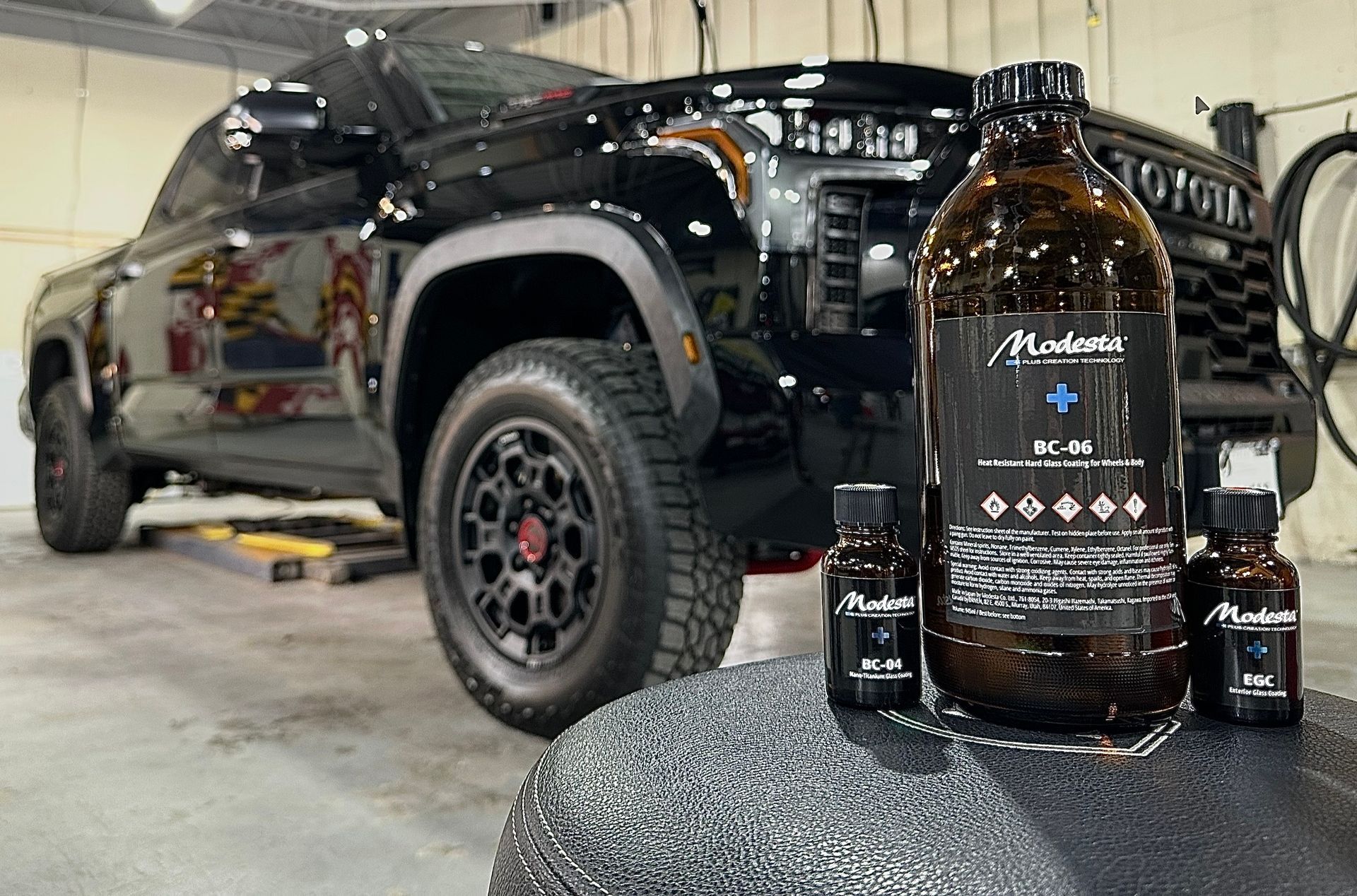
Not all ceramic coatings are created equal. At Maryland Auto Spa, we use Modesta ceramic coatings exclusively — one of the most respected professional-grade coating brands in the world. Our Coat & Care packages feature two Modesta formulas depending on your protection goals:


Modesta BC-X (Level 1 Coat & Care System): A single-step gloss enhancement polish followed by a full Modesta BC-X coating on all painted surfaces and trim, including a polished and coated front windshield. BC-X delivers years of reliable protection with a stunning gloss finish.


Modesta BC-04 (Level 2 Coat & Care System): Our strongest and longest-lasting system. A full two-step paint correction, cut and polish, followed by BC-04 on all painted surfaces, with all exterior glass polished and coated as well. BC-04 is engineered for drivers who want the absolute best and expect their coating to perform for five or more years with proper maintenance.


Both systems use Modesta's proprietary nanotechnology to bond at the molecular level with your vehicle's clear coat, creating a surface so slick and hydrophobic that water, dirt, bird droppings, and road grime simply don't stand a chance.


Why Maintenance Is the Missing Piece


Think of your ceramic coating like a premium set of tires. The best tires in the world still need to be rotated, balanced, and checked regularly to perform safely and last their full lifespan. Skip the maintenance and even the best product fails ahead of schedule.


The same is true for ceramic coatings. Here's what happens without a maintenance routine: iron fallout from brake dust embeds into the coating surface over time, dulling the finish and reducing hydrophobicity. Hard water mineral deposits from rain and washing create a rough, hazy texture on the surface. Without seasonal inspections, small issues that could be corrected early go unnoticed until they become bigger problems.


The Coat & Care System addresses all of this proactively, keeping your coating in peak condition season after season, year after year.


A Standard We Hold Ourselves To


Maryland Auto Spa has been a certified ceramic coating installer since 2007. Over nearly two decades, we've refined our installation process, our product knowledge, and our approach to customer care. We're proud members of the Air Force One Detailing Team, a distinction that reflects our commitment to precision, professionalism, and results that exceed expectations.


We don't just install coatings. We build relationships with our customers around protecting the vehicles they love. The Coat & Care System is the clearest expression of that commitment.


Is the Coat & Care System Right for Your Vehicle?


If you drive a vehicle you care about, whether it's a brand new daily driver, a weekend toy, or a vehicle you plan to keep for years, the Coat & Care System is the smartest investment you can make in its long-term appearance and value. Protecting your paint from day one is always easier and less expensive than repairing damage down the road.


Our team is happy to walk you through which Coat & Care package is right for your vehicle, your driving habits, and your budget. Every quote is free, and every conversation starts with listening to what matters most to you.
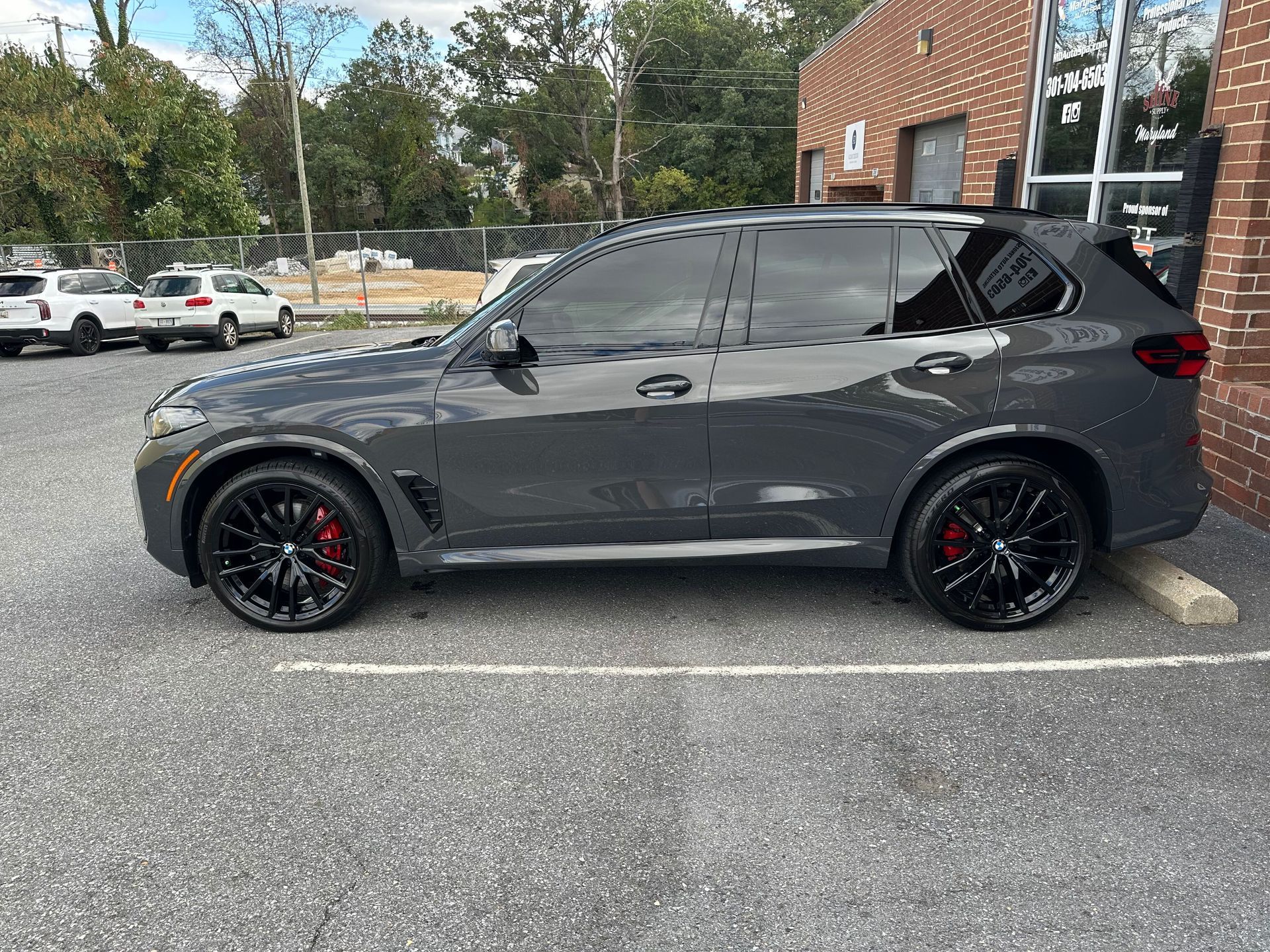
A dark gray BMW SUV parked in an outdoor gravel lot near a brick building.
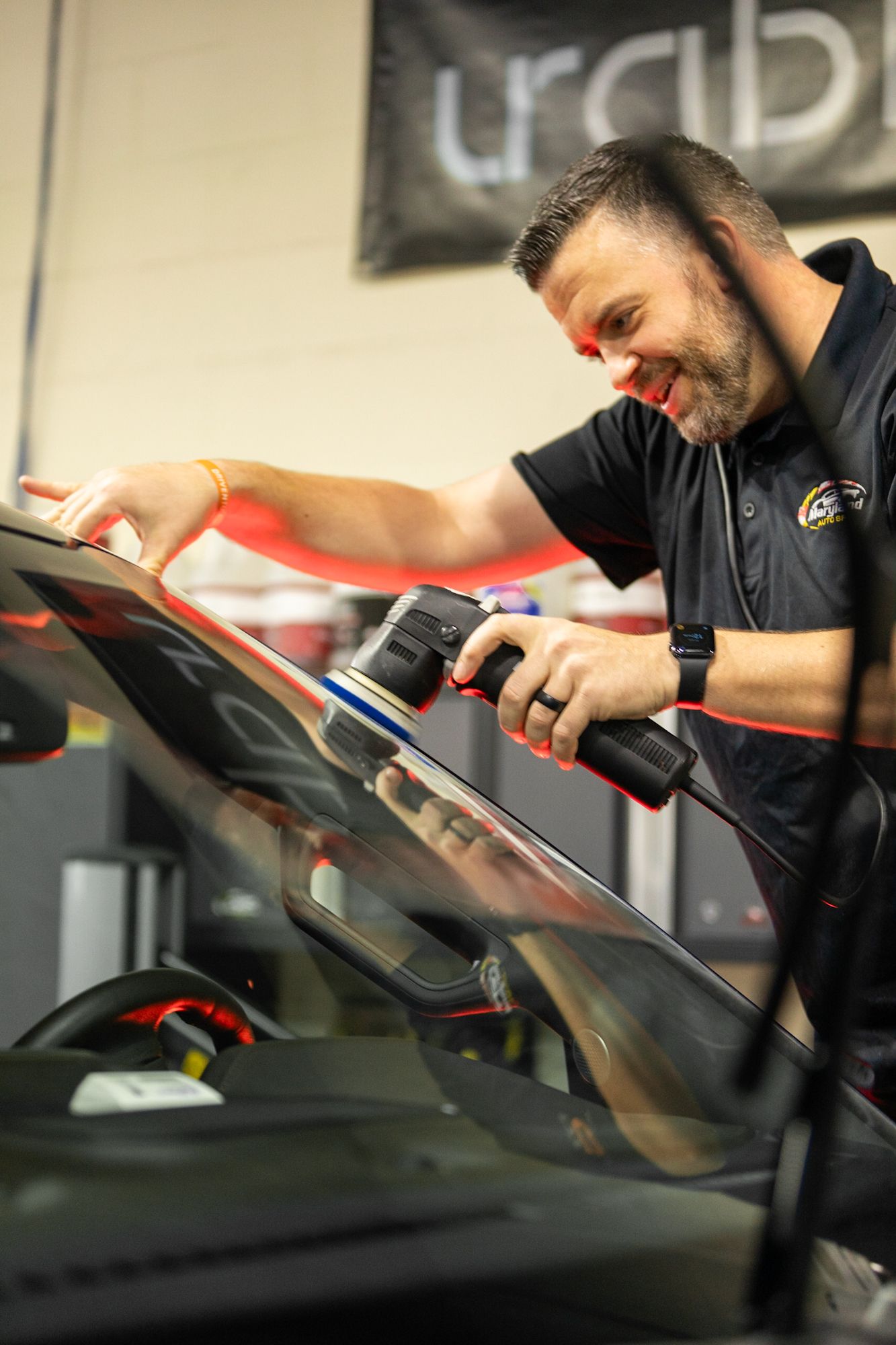
A smiling technician uses a power buffer to polish the windshield of a vehicle in an auto shop.


Ready to protect your vehicle the right way? Contact Maryland Auto Spa today to schedule your free Coat & Care consultation. Our Silver Spring, MD shop serves customers throughout Montgomery County, Howard County, Washington D.C., Bethesda, Potomac, and surrounding areas.


Get a Free Quote Today

Blog

By Carson Mangum May 12, 2026
Every week, someone walks into our shop and asks some version of the same question: "Should I get PPF or ceramic coating?" It sounds simple. It isn't — because they're not the same thing, they don't solve the same problem, and choosing the wrong one (or skipping both entirely) costs real money down the road. We've been doing this for 19 years. We've seen what happens to vehicles that were protected correctly and vehicles that weren't. This is the guide we wish every customer read before they called us. First, Understand What You're Actually Protecting Against Paint takes damage from two completely different categories of threat, and each product is designed to handle one of them. Physical threats are anything that makes contact with your paint: gravel kicked up on the highway, road debris, a shopping cart in a parking lot, a branch, a key. These threats don't care how glossy your paint is or how hydrophobic your coating is. If something hits your car with enough force or abrasion, paint gets damaged. End of story. Environmental threats are the slow, invisible damage that accumulates over time: UV radiation breaking down your clear coat, bird droppings and tree sap etching into the surface if left to sit, industrial fallout bonding to the paint, hard water leaving mineral deposits, road grime embedding itself into microscopic pores. None of this happens in a single event. It compounds over months and years until your paint looks dull, feels rough, and requires expensive correction to fix. Once you understand those two categories, the rest of this becomes straightforward. What Paint Protection Film Actually Does PPF — paint protection film — is a urethane film, typically 6 to 8 mils thick, that is cut and installed directly onto your paint surface. Think of it as a transparent sacrificial layer that takes the hit so your paint doesn't have to. When a rock at highway speed strikes a PPF-covered panel, the film absorbs and disperses the impact. Your paint underneath is untouched. On bare paint, that same rock leaves a chip that exposes raw metal to rust and moisture. Premium films — the ones we use from STEK — also self-heal. The top coat of the film has elastic memory: minor surface scratches and scuffs disappear when heat is applied, either from the sun or a heat gun. You can drag a key across the surface, hit it with a heat gun, and watch the scratch vanish. That's not marketing language. That's the chemistry of how modern top-coat formulations work. What PPF does not do: it doesn't prevent UV fade on the surrounding panels it doesn't cover. It doesn't make your car easier to wash. It doesn't provide chemical resistance to bird droppings or tree sap on unprotected areas. It is a physical barrier, not a chemical one. What Ceramic Coating Actually Does Ceramic coating is a liquid silica-based polymer that bonds to your paint at the molecular level. When properly applied and cured, it creates a semi-permanent hard shell over your clear coat — harder than the clear coat itself — that fundamentally changes how your paint interacts with the environment. Water beads and sheets off immediately rather than sitting on the surface and evaporating into mineral deposits. Contaminants don't bond as readily to the surface, so bird droppings, tree sap, and road grime are far easier to remove. UV inhibitors in the coating slow clear coat oxidation. The overall gloss and depth of the paint improves visibly. For day-to-day use, the practical effect is a car that's dramatically easier to keep clean. A wash that used to take 45 minutes takes 15. Contamination that used to require a clay bar comes off with a rinse. That's not an exaggeration — it's the difference between a raw clear coat surface, which is microscopically porous and adhesive to contaminants, and a ceramic-coated surface, which is smooth, hard, and hydrophobic. What ceramic coating does not do: it does not prevent rock chips. A ceramic-coated hood takes the same chip damage from highway debris as an uncoated one. Anyone telling you otherwise is not being straight with you. The Decision Framework: What Does Your Car Need? Stop thinking about it as two competing products and start thinking about it as a risk assessment. Your primary threat is physical impact. You drive on highways regularly. You live near construction zones. You park in lots where door dings are a real risk. You've had chips before and you're tired of them. PPF is your answer — specifically on the front end, where the overwhelming majority of impact damage occurs: the bumper, hood, fenders, and mirrors. That coverage alone eliminates 80% of the chip and debris risk on most vehicles. Your primary threat is environmental degradation. You park outside. You deal with tree sap or bird activity. You want a car that stays looking clean with less effort. You're in it for the long-term paint health and resale value. Ceramic coating across the full vehicle is the right call. The coverage is comprehensive, the durability lasts years, and the maintenance savings add up quickly. You have a new vehicle, a sports car, or something you're treating as a long-term investment. Do both. Apply PPF to the high-impact zones and ceramic coating over the entire car — including over the film itself. You get physical protection where it matters most and full environmental protection everywhere. This is the correct answer for any vehicle you genuinely care about, and it's what we recommend most often to customers who ask us straight. You're working with a tighter budget. The smart call is ceramic coating on the full vehicle plus PPF on the front bumper and hood at minimum. You cover the most vulnerable areas for physical damage and get comprehensive environmental protection everywhere else. It's the highest-impact combination for the dollar. What Happens When You Skip Protection Entirely We see it constantly. A car comes in for paint correction — swirl marks, water spots etched into the clear coat, chips that have started to rust at the edges, oxidation spreading across the hood. The owner is shocked at the quote. Paint correction on a car that's been neglected for three or four years is not a quick job. The math usually looks something like this: protection applied at the time of purchase costs a fraction of what paint correction and repaint work cost later. And correction doesn't reset the clock the way proper protection does from the start — it addresses what's already there, but it can't recover a clear coat that's been UV-degraded for four years. The best time to protect a vehicle is when it's new. The second best time is now, before the damage compounds further. A Note on the Products We Use We're a Modesta-certified studio — one of a very small number in the country. That certification matters because Modesta operates differently from most professional ceramic coating lines. Higher silica dioxide concentration, deeper molecular bonding, longer verified durability in real-world conditions. When we apply ceramic coating at MDAS, we're using the best professional product available, applied by installers who have been trained and certified to use it correctly. Most shops carry one or two film lines and work with whatever they have in inventory. We carry STEK because different vehicles and different use cases call for different films. Thickness, finish, self-healing performance, and edge conformability all vary across products. Matching the right film to the right vehicle isn't splitting hairs — it's the difference between an installation that looks factory-perfect and one that doesn't. The Honest Answer "PPF or ceramic?" is really two separate questions: what are you protecting against, and what does your specific vehicle and driving situation actually call for? The answer is different for a daily-driven SUV in Silver Spring than it is for a weekend sports car that lives in a garage. We've been having this conversation with customers for 19 years. We're not going to upsell you on something you don't need, and we're not going to undersell you on protection that will save you money in the long run. Come in and let's look at your car together. Ready to figure out what your car needs? Book a consultation at mdautospa.com or call us at (301) 704-6503. BOOK A CONSULTATION  Maryland Auto Spa | 8931 Brookville Rd, Silver Spring, MD 20910 Modesta-certified ceramic coating studio. STEK authorized installer. Serving the DMV area since 2007.
By Carson Mangum April 17, 2026
Maryland Auto Spa | Silver Spring, MD
Water beading on a ceramic coated Porsche — Maryland Auto Spa Silver Spring MD
By Carson Mangum April 7, 2026
How to wash a ceramic coated car without damaging it. The step-by-step rinseless wash method from Maryland Auto Spa — products, process, and what to avoid.